

What MRO distributors should ask before recommending a replacement vacuum seal
By Kevin Lai
A customer sends a photo of a worn rubber ring. “Can you get me another one like this?” You can ask for the diameter, but there’s a better question to start with. What happened on the machine that made the customer take the photo?
 A cut in the sealing lip points you in one direction. A machine that takes longer to reach vacuum gives you more to check. Before looking up a part, find out what’s installed and why the customer wants to change it.
Find out what is on the machine
Ask for the machine make and model and the part number on the cup or suction plate. If the number is hard to read, ask for a photo of the machine nameplate and photos of the cup from the side and from both faces. The side view may show how the seal is held in place. The back may show the connection and the position of the vacuum port.
Then ask what the cup picks up and what happens after pickup. Does the sheet stay flat or does the machine turn it upright? Is the surface wet, oily or dusty? Has the customer changed materials or cleaners? Those details help when you’re checking the part specification against what the machine actually does.
Check whether the seal is sold separately
Look up the parts drawing or service instructions for that assembly. Some cups have a replaceable seal. Others are serviced by changing the complete cup. If the seal can be replaced, ask maintenance to check the parts they plan to reuse. A nick in the groove or a bent backing plate can keep the new seal from sitting properly.
If the original complaint was slow vacuum buildup, pass that along to the maintenance team. A cracked hose, a leaking fitting or a restricted filter can also slow the cycle. It’s useful to have that symptom on the work order alongside the condition of the seal.
Match the part before placing the order
Two rings can measure the same across the outside and sit differently on the same plate. Check the documented part number first, including any revision or material suffix. When the number is missing, measurements and photos help narrow the search. The lip shape, how the seal is retained and the material still need to match the assembly specification. If the records leave room for doubt, get the equipment manufacturer or the customer’s technical team to confirm the choice.
Once the part is confirmed, record it against the machine and station. On a line with several similar cups, “the 200 mm one” is a description someone may use for more than one part. The assembly and seal numbers give the next person something concrete to look up.
Ask who will check the equipment after service
When you send the quote, share the service instructions for that assembly if you have them. Ask the customer’s maintenance team to follow the equipment’s isolation and service procedures when fitting the seal. Once it’s in, they should check that it sits evenly and is held in place. Before the machine goes back to work, the team should complete the checks called for by the equipment manufacturer. For lifting equipment, those checks should confirm that the assembly meets the vacuum and holding requirements for the intended load and movement.
Before closing the call, ask one last question. “Do you have the service instructions for this cup?” If the answer is unclear, help the customer find the instructions for the assembly you’ve identified. That way, the person fitting the part has the same reference you used to order it.
Kevin Lai works with industrial vacuum handling components at Eurotech Vacuum Technologies in Taiwan. The company’s website is https://eurotech-vacuum-technologies.com/.

INDUSTRIAL SUPPLY MAGAZINE



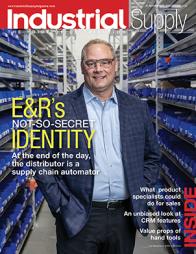
The November/December issue of Industrial Supply magazine features an in-depth cover story about E&R Industrial. Plus, we're featuring articles by contributing writers Dr. Bharani Nagarathnam and Frank Hurtte, as well as interviews with numerous product and distribution industry experts.