


Dematic brief: 2026 warehouse winners will be able to flex capacity
Across industries, supply chains are still operating in a state of “managed volatility” rather than true stability, according to the latest Dematic Intelligence Brief.
Tariff regimes, energy and transportation costs, and climate-related disruption continue to drive risk, yet most operators are responding with targeted moves — sourcing shifts, inventory timing, brownfield upgrades — rather than wholesale network overhauls. At the same time, productivity and supply chain efficiency are being elevated as core profit levers, with automation and digital tools increasingly framed as structural, not discretionary, investments.
Large capital programs in sectors such as pharmaceuticals are building end-to-end capacity at an unprecedented scale, while retailers and consumer brands are rationalizing legacy nodes in favor of more flexible, multi-use facilities.
For warehouse and logistics professionals, the signal is clear: the winners in 2026 will be those who can flex capacity, move inventory with intent, and extract more throughput from both people and assets without sacrificing resilience.
Automation Is Reshaping Warehouse Jobs
The warehousing workforce is entering a period of rapid disruption, according to Dematic leadership. New data show warehousing ranks among the lowest-quality job categories in the U.S., with just 26% of employees in quality jobs, compared with 53% in professional services and 49% in wholesale trade. Against this backdrop, customers are increasingly asking which new, tech-enabled jobs will emerge in the near future. This conversation isn’t just about robotics; it’s about redefining the warehouse career ladder at a moment when job quality, worker sentiment, and organizational performance are under national scrutiny.
Inventory Once Again Serves as the First Line of Defense
Several Dematic customers are actively using inventory as a shock absorber against tariffs and demand uncertainty. We see companies pulling shipments forward into key markets ahead of tariff implementation, accepting temporarily higher inventory levels in exchange for cost certainty and service continuity. Others are holding seasonal or strategic stock a bit longer to bridge soft demand periods or navigate regulatory and pricing changes. This is a continuation of the “inventory as insurance” playbook, but at larger dollar and volume scales than prior cycles. Looking ahead to future peak seasons, the implication for warehouses is continued emphasis on storage density, inventory visibility, and the ability to rapidly unwind these buffers without creating congestion or write-offs.
Capacity-Hungry Sectors Pour Capital into End-to-End Supply Chains
In sectors such as food and beverage, major global manufacturers are announcing multi-year capital programs equating to tens of billions of dollars, explicitly labeled as supply chain expansion. These investments are not limited to a single plant or region; they span active ingredient production, packaging, and downstream distribution capacity. The driver is clear: persistent demand outstripping current supply, coupled with allocation challenges and politically sensitive product availability, is pushing companies to overbuild capacity compared to historical norms. For warehouse and intralogistics stakeholders, this introduces significant opportunities in in-plant material flow, distribution centers, and highly automated packaging and kitting operations that must scale quickly.
Productivity and Supply Chain Efficiency Become Margin Engines
Across categories — from beverages and consumer goods to specialized B2B services — Dematic customers are positioning supply chain efficiency as a central pillar of their productivity and margin-expansion stories. Rather than episodic cost-cutting, logistics is being framed as an ongoing management discipline: optimizing transportation, refining network design, and leveraging automation and data to do more with the same or fewer people. In some models, brand owners are pushing more logistics capital investment to ecosystem partners (for example, bottlers and franchisees), while maintaining central orchestration and standards.
Sustainability Metrics Move from ESG Slides into Supply Chain Design
Dematic also hears a growing focus on supply chain-driven sustainability metrics, particularly around Scope 3 emissions and packaging footprints. Some manufacturers are tracking emissions and material usage at a per-unit level and setting 5-to-10-year reduction targets that directly depend on how products are designed, packaged, and moved. Rising transport and energy costs are reinforcing this push by making inefficient logistics more expensive in pure dollar terms, not just ESG scores. For warehouse and intralogistics planning, this is increasing interest in packaging automation, right-sized shipping, and network designs that reduce empty miles and redundant handling, while still supporting resilience and service levels.

INDUSTRIAL SUPPLY MAGAZINE
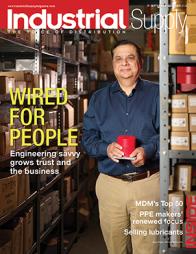
The September/October issue of Industrial Supply magazine features an in-depth cover story about Rotator Products. Plus, we're featuring articles by contributing writers Dr. Bharani Nagarathnam and Frank Hurtte, as well as interviews with numerous product and distribution industry experts.