


Building a dynamic warehouse through intelligent system integration
By Bill Erdely
Given today’s increasingly complex and fast-moving distribution and fulfillment environments, warehouse performance can really no longer be driven by any single system. A warehouse is only as efficient as its ability to connect systems, exchange data reliably, and turn information into action. Success depends on how well your technology stack works together. That’s why system integration has become a foundational requirement for modern operations.
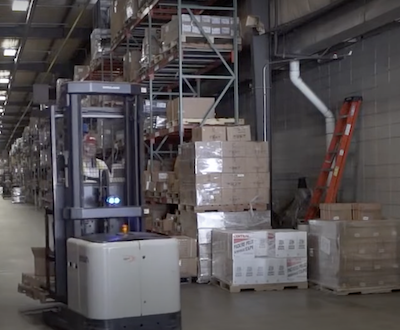 As organizations add warehouse optimization software, mobile applications, voice solutions, or AI-driven tools, the ability to integrate smoothly with existing Warehouse Management Systems (WMS) and Enterprise Resource Planning (ERP) platforms becomes critical. Without strong integration, even the most advanced tools can create friction instead of value. With it, warehouses unlock faster execution, greater visibility, and a more adaptable operation.
Why Integration Is So Important
Integration enables warehouse technologies to operate as a unified ecosystem rather than a collection of disconnected tools. When systems communicate effectively, data flows automatically, processes stay synchronized, and decisions can be made in real time. Orders move seamlessly from planning to execution, inventory updates instantly, and associates receive clear, accurate direction without relying on manual workarounds.
Poor integration, on the other hand, creates delays, errors, and frustration. Teams may be forced to re-enter data, reconcile mismatched information, or pause operations to troubleshoot system issues. These inefficiencies not only slow productivity but also increase labor costs and erode confidence in the technology itself.
Modern warehouse optimization platforms are designed with integration in mind. Most can connect to on-premise, hosted, or cloud-based environments and work alongside leading ERP and WMS platforms such as SAP, Oracle, Microsoft, Blue Yonder, Manhattan, and Infor. They can also integrate with custom-built systems, warehouse control systems (WCS), and automation technologies.
The objective is not to replace what already works, but to enhance existing systems and extend their capabilities where limitations exist.
Flexible Integration for Real-World Operations
No two warehouses are exactly alike. Each operation has its own mix of legacy systems, modern platforms, automation, and unique process requirements. Because of this, flexibility in integration methods is essential.
Most optimization solutions support multiple approaches to data exchange, including real-time APIs, event-driven messaging, and scheduled batch file transfers. Many organizations use a combination of these methods to ensure the right data reaches the right system at the right time. For example, real-time updates may be critical for task execution and labor direction, while batch processes may be sufficient for reporting or planning data.
The goal of flexible integration is to enhance performance without disrupting current operations. A well-designed integration strategy works within your existing architecture while enabling new capabilities to be layered in over time.
Two Common Paths to WMS Integration
While every implementation is unique, most warehouse integrations fall into one of two primary models depending on system maturity and optimization goals.
1. Mobile or Plug-In Integration – For warehouses that already have mobile or voice functionality built into their WMS, a plug-in style inte-gration may be the fastest path forward. In this model, mobile or voice-directed applications connect directly to the WMS interface, allowing organizations to deploy enhanced workflows quickly with minimal infrastructure changes.
This approach is often ideal for operations looking to improve associate productivity, accuracy, or ergonomics without rearchitecting their systems. However, some configuration or interface adjustments may be required to align the WMS with desired workflows.
A best practice is to start by defining the ideal operational process, then conduct a gap analysis to determine how closely the current WMS supports it. This helps ensure the technology adapts to the operation, not the other way around.
2. Server-Based Integration – For organizations pursuing deeper optimization, a server-based integration model is often more appropriate. This approach introduces an intelligent orchestration layer that communicates directly with the WMS, ERP, WCS, and automation systems.
This model supports advanced capabilities such as dynamic batching, intelligent task interleaving, real-time labor optimization, and cross-system coordination. Rather than relying solely on the WMS to manage execution, the optimization layer continuously analyzes conditions and directs work in the most efficient way possible.
Jennifer, the brain, voice, and orchestration engine of the Lucas system, operates within this multi-tier architecture. Jennifer communicates with host systems in real time, manages mobile workflows, optimizes work distribution, and ensures seamless data exchange across the entire ecosystem. This architecture can be deployed on-premise or in the cloud and enables sophisticated workflows without requiring costly customizations to core WMS software.
Addressing Common Integration Questions
When evaluating mobile, voice, AI-driven, or optimization solutions, organizations often ask similar questions about compatibility and sequencing.
Do I need a Tier 1 WMS to use advanced optimization tools?
No. Many warehouses running highly effective mobile or voice solutions operate on ERP-based, mid-tier, or even custom-built systems. Modern integration techniques allow optimization tools to enhance existing processes without requiring a major WMS upgrade.
Should I implement mobile or voice tools before or after upgrading my WMS?
That depends on your priorities and timeline. Many organizations deploy mobile or voice solutions first because they can be implemented quickly and deliver immediate productivity gains. When a WMS up-grade eventually occurs, associates retain familiar workflows, reducing training time and minimizing operational disruption.
Is my current WMS compatible with modern optimization software?
In most cases, yes. Today’s optimization platforms are designed to integrate with a wide range of systems, from modern cloud solutions to legacy environments. Standard integration technologies help reduce cost, shorten implementation timelines, and ensure reliable communication between systems.
Integration as a Strategic Advantage
As warehouse technology continues to evolve, integration is no longer a technical detail; it’s a strategic capability. Whether the focus is labor optimization, mobile execution, real-time orchestration, or improved visibility, seamless connectivity between systems is what enables these outcomes.
Effective integration isn’t about replacing your WMS or ERP. It’s about connecting your ecosystem so each system contributes its strengths while working together intelligently. When integration is done right, warehouses become more resilient, more adaptable, and better prepared to handle constant change.
In the end, integration without limits is what allows warehouses to move faster, operate smarter, and continuously improve, no matter what systems are already in place.
Bill Erdely is the senior director of solution consulting and project management at Lucas Systems, bringing over 25 years of experience in supply chain execution and technology. His expertise spans warehousing and distribution, transportation, and labor management systems, with a deep background in seriali-zation, RFID, and software validation.
Throughout his career, Bill has led solution design and delivery for Tier-1 organizations across industries, holding leadership roles at companies like Körber, Capgemini Engineering, and RedPrairie. He has extensive hands-on experience with a significant number of distribution and supply chain systems and platforms, along with strong technical skills in SQL, UNIX, and enterprise reporting tools.

INDUSTRIAL SUPPLY MAGAZINE




The September/October issue of Industrial Supply magazine features an in-depth cover story about Rotator Products. Plus, we're featuring articles by contributing writers Dr. Bharani Nagarathnam and Frank Hurtte, as well as interviews with numerous product and distribution industry experts.