
Try a 'Choose Your Own Adventure' Compensation Strategy
What if your compensation strategy felt less like a fixed package and more like a “choose your own adventure” employees could shape themselves?

When total rewards become a flexible, everyday part of the employee experience — not a once-a-year enrollment decision — they become far more powerful for attracting and retaining talent.
Many organizations still design compensation programs based on what they think employees want instead of what employees actually value. Companies that treat total rewards as something that evolves with their workforce tend to see stronger engagement and retention. Today’s employees expect choices that reflect their stage of life, career goals, and personal priorities. The key is offering flexibility while keeping a clear and consistent structure in place.
Here’s how distributors can turn total compensation into a “choose your own adventure” experience while maintaining fairness and control:
- Start with clear guardrails. Set clear pay ranges and outline what managers can adjust versus what needs HR involvement. Without those boundaries, personalization can quickly turn into inconsistency.
- Use data but don’t overcomplicate it. Benchmark pay by role, location, and skill demand, then use performance and retention data to guide where employees fall within the range.
- Give employees real choices within limits. Consider offering options across bonus mix, PTO, learning budgets, caregiver support, or scheduling flexibility. Many organizations are finding success with frameworks that allow trade-offs without increasing overall cost.
- Think in talent segments first. Early-career employees, specialists, leaders, and frontline roles often value different things. Build strong baseline packages for each group, then personalize with smaller add-ons instead of redesigning every offer from scratch.
- Link pay growth to skills and business impact. Tie incentives and pay growth to certifications, new capabilities, and measurable business outcomes to encourage career development and transparency.
- Recognize that employee priorities change over time. Life-stage benefits like student loan support, childcare assistance, or retirement planning help employees stay engaged as their needs evolve.
- Use technology and employee feedback. Compensation tools can help employees see the value of their total package and help leaders spot retention risks earlier. The best tools make conversations easier, not more technical.
Organizations that build flexible, structured personalization create cultures where employees feel valued and motivated to stay. When employees can help shape their rewards journey, engagement naturally follows.
Industry Perspective
“In our market, we’ve learned that pay isn’t always the deciding factor," said ?Amy?Twardowski, director of business Analysis,?Johnstone Supply South Texas. "Strong benefits and long-term incentives often matter just as much. But when hiring conditions change, you have to regularly check that your existing employees are still paid fairly compared to new hires.”
In the Field: Stories & Examples from Distributors
Millennials and Gen Z expect benefits that fit their lives. Check out some of the best practices for implementation according to SHRM Labs.
This "Tip of the Week" is provided by the Talent Development Council | Texas A&M University.

INDUSTRIAL SUPPLY MAGAZINE


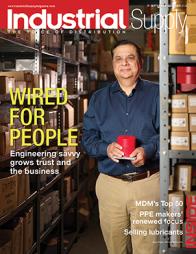
The September/October issue of Industrial Supply magazine features an in-depth cover story about Rotator Products. Plus, we're featuring articles by contributing writers Dr. Bharani Nagarathnam and Frank Hurtte, as well as interviews with numerous product and distribution industry experts.