

Optimizing industrial performance: an insider perspective on hose and accessory selection
If you’ve been in this business long enough, you already know that most hose failures aren’t really about the hose. From one distributor to another, the difference between a smooth-running operation and a costly shutdown usually comes down to how well the full assembly was understood at the start.
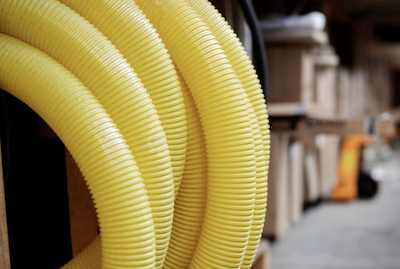 We’ve seen it play out repeatedly: A customer orders a replacement “same as last time,” but the application has shifted, there are slightly higher temps, a different chemical blend, tighter routing. On paper, the hose spec still looks right. In reality, it’s now the weak link. That’s where distributors who pay attention separate themselves. Material selection isn’t just a catalog exercise; it’s about knowing where each option starts to break down in real-world conditions.
Take flexible metal hoses — they’ll handle extremes that most other materials won’t, but they don’t forgive poor installation or excessive movement. PTFE-lined hoses are resilient with aggressive media, but they can be overkill, or underperform, if not paired with the right fittings and support. Composite hoses offer versatility, but only when their layer construction aligns with the actual product being transferred. None of this is new, but what matters is how often these nuances get missed in day-to-day orders.
Where things really go wrong, in our experience, is with accessories. It’s easy to focus on the hose and treat fittings and couplings as interchangeable. They’re not. A mismatched coupling or a lower-grade gasket can quietly undermine the entire assembly. Leaks, pressure drops, even safety incidents—more often than not, that’s where they start. The distributors who consistently get it right are the ones who think in terms of assemblies, not individual components.
Another point that doesn’t get talked about enough: Asking better questions upfront saves everyone time later. What’s the actual operating temperature, not the nominal one? Is there vibration? How tight is the bend radius in the installed position, not just on paper? These details are easy to skip when things are busy, but they’re usually the difference between a hose that lasts years and one that fails in months.
A proven method to ensure to account for the many variables in the early design phase of a hose assembly is to start with a STAMPED form. This form captures all of the pertinent information such as size, temperature, and pressure. It also captures granular details for the application including material conveyed, end-fitting orientation, environmental conditions, movement, and potential vibration. An often overlooked component of hose design is how the hose will be tested (pneumatic or hydrostatically), end-user test documentation requirements, specific packaging requirements, and even onsite delivery/unloading capabilities. Starting with a STAMPED form will significantly improve the probability the hose assembly will meet the application requirements and operate for an extended period.
On the inventory side, the distributors that perform best aren’t necessarily the ones carrying the most stock, they’re the ones carrying the right stock. A well-balanced mix of core hose types and critical accessories means you can respond quickly when a customer is down, without scrambling or substituting something that’s “close enough.”
At the end of the day, this isn’t about selling more hose, it’s about fewer problems after the sale. The distributors who approach hose and accessory selection with that mindset tend to build stronger customer relationships and avoid the headaches that come with preventable failures. It’s not complicated, but it does require staying disciplined in how we evaluate and supply these systems every day.
 Trey Travis is vice president of operations at Southeastern Hose, a third-generation, family-led manufacturer and fabricator specializing in hose assemblies, expansion joints, and related industrial solutions. He specializes in operations management, inventory control, non-profit management, and client relations, and offers a practical perspective on manufacturing operations, workforce development, customer service, and the evolving needs of industrial markets.

INDUSTRIAL SUPPLY MAGAZINE




The September/October issue of Industrial Supply magazine features an in-depth cover story about Rotator Products. Plus, we're featuring articles by contributing writers Dr. Bharani Nagarathnam and Frank Hurtte, as well as interviews with numerous product and distribution industry experts.