


What Most Sales Organizations Get Wrong, and How to Fix It
By Troy Harrison, The Sales Navigator
Here's a question I ask almost every CEO I meet: How much of your sales organization was designed and built on purpose — and how much just happened?
 I've been asking that question for 20 years, in 23 countries, in companies ranging from five employees to five thousand. And here's what I can tell you: almost nobody designed their sales organization. They accumulated one.
They hired their first salesperson because they needed help. Then they hired another when things got busy. They promoted someone to sales manager because she'd been there the longest, or because he was the top rep, which — as any experienced sales leader will tell you — has absolutely nothing to do with whether someone can actually manage. Fifteen years later, they have something that looks like a sales organization from the outside, but operates like an accident from the inside.
Then they wonder why training doesn't stick, results don't improve, and good salespeople keep leaving.
Here's the diagnosis: They're trying to solve an organizational problem with an individual solution. And it never works.
There Are Four Layers — Most Companies Have Pieces of One
I've developed a framework I call The Navigator's Chart. It's a complete operating model for the modern B2B sales organization, and it has four layers. The Waters — understanding your buying environment. The Vessel — building the organizational infrastructure. The Crew — hiring and developing the right people. The Route — the actual selling.
Most companies have invested heavily in Layer IV, The Route. Sales training. Scripts. Closing techniques. CRM systems. And they've left everything above the individual salesperson completely to chance.
That's the expensive mistake. Here's what it looks like in each layer.
The Waters: Your Buyers Changed. Your Sales Approach Didn't.
A CEO came to me recently with a one-star review about one of his salespeople. The rep had used a technique called Negative Reverse Selling — you tell the prospect you don't see a fit, and try to get them to convince you. It's a technique built on the assumption that the customer expects a little game-playing from salespeople.
The customer didn't see it as a technique. He saw it as a lie. The review said, "Most dishonest salesman I've ever dealt with." And that customer would have been one of their top five accounts.
The rep wasn't executing the technique wrong. He was executing it in the wrong century. Today's B2B buyer has done 70% to 80% of their research before they ever agree to a conversation with you. They don't need you to educate them. They need you to earn the right to be in the room. Techniques built for buyers who expected salespeople to fudge a little don't work on buyers who expect you to be straight with them — and have zero patience when you're not.
The Vessel: You Can't Hold People Accountable to Standards You Never Set
When a salesperson underperforms and there are no defined metrics, the only thing a manager can point to is the result — the missed number. And when the only evidence you have is the outcome, the conversation inevitably becomes about the person rather than the behavior. You're not discussing what she did or didn't do. You're telling her she's not good enough. That's when defensiveness sets in, morale erodes, and good people start looking for the door.
Metrics change that entirely. When you know a rep needs twelve first appointments per week to build a healthy pipeline and she's running at seven, you have a specific, coachable problem — not a character indictment. Without those baselines, you have no way of knowing whether you have a people problem or a process problem. No call targets. No appointment benchmarks. No pipeline conversion rates. That's not a management system. That's a hope-based system. And hope is not a strategy.
The Crew: Gut Feel Is Not a Hiring Process
Two out of three sales hires fail. Think about what that means. The average company is wrong more than it's right every time it hires a salesperson.
The reason isn't that good salespeople are hard to find. The reason is that most companies have no real process for identifying them. They run a standard interview, ask the candidate what their strengths are, decide they like the person, and make an offer based on vibes.
Behavioral interviewing — asking candidates to walk you through specific situations from their actual experience, not what they would do in a hypothetical — is the most accurate predictor of future performance we have. Only thirty percent of companies use it consistently. The other seventy percent keep hiring on gut feel, then wondering why their winning percentage is so low.
The interview's job is not to find someone you like. It's to find evidence of the behaviors you need. You can learn to like them later. Maybe.
Navigating What Most Sales Organizations Get Wrong
Start with The Vessel. Sit down with your sales manager and answer three questions: How many first appointments does each rep need per week to build a healthy pipeline? How many proposals need to go out? What does the conversion rate between each stage need to look like for someone to hit their number? If you can't answer those with actual data, define them — today.
Once the metrics exist, your hiring problem gets easier too. Now you know what behaviors you're selecting for. A rep who has never managed a twenty-call-per-week prospecting cadence is a different candidate than one who has. Behavioral interviewing lets you find that out before you make the offer instead of three months after.
None of this requires a consultant. It requires an honest afternoon and the willingness to define what good looks like — in writing, with numbers attached. The companies that do it stop wondering why results are inconsistent. They've finally built the instrument panel that tells them exactly where to look.
Most CEOs already know how much of their sales organization was designed — and how much just happened. The next step is deciding to do something about it.
 Troy Harrison is the Sales Navigator, a speaker, and the author of “Sell Like You Mean It” and “The Pocket Sales Manager.” He has trained salespeople from 23 different countries who live on three continents and has spoken all over North America and Europe. He helps companies navigate the Elements of Sales on their journey to success. He offers a free 45-minute Sales Strategy Review. To schedule, please visit www.TroyHarrison.com/ssr.

INDUSTRIAL SUPPLY MAGAZINE

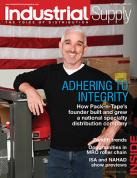



The September/October issue of Industrial Supply magazine features an in-depth cover story about Rotator Products. Plus, we're featuring articles by contributing writers Dr. Bharani Nagarathnam and Frank Hurtte, as well as interviews with numerous product and distribution industry experts.