
Welcome to the World of Continuous Reinvention
 |
| istockphoto.com |
Get ready before the first flake falls.
by Howard Coleman
If you sometimes feel, like me, that you’re facing non-stop disruption, you may not be imagining it. It’s a question I’ve asked myself over the past few years.
In fact, as 2025 came to an end, I asked: What single word truly captures the world we are stepping into? For 2026, my choice was one coined by futurist Roger Spitz: metaruption! It’s a multidimensional family of systemic disruptions. Disruptions stacked on top of disruptions – each feeding the next.
Remember how we used to fear the rare “Black Swan,” that unpredictable shock? Today, they don’t arrive one at a time – they arrive in flocks. They lay eggs for more Black Swans. No slowdown, no plateau, just acceleration.
Consider the influx: (1) Tariffs redrawing trade routes. (2) The unclear impacts of AI on people we once thought irreplaceable. (Even the talk of an “AI Bubble” is scary). (3) Today’s workforce rewriting the rules of engagement. (4) Executives everywhere who could be coming to a realization that 2025 might have been the slowest year of the rest of their lives. This isn’t just a flurry of change – it’s a permanent climate shift that often feels like everything is shifting at once.
Yet, too many organizations still pretend they can ride out the storm, survive until things “stabilize,” and then get back to normal. That assumption is probably outdated – even dangerous.
Disruption used to be something you could point to: a new competitor, a new technology, or a new regulation.
Metaruption is different: there may be no single cause, no clear beginning, or no clean end.
Instead, leaders face overlapping pressures that hit strategy, operations, culture, and people – all at once. It explains right now why so many organizations feel strangely stuck. Not because they lack intelligence or effort – but because linear tools cannot solve nonlinear realities.
Metaruption is why “best practices,” which previously may have served us well, age overnight. It’s why change fatigue is everywhere, and why even successful companies sense their footing is less stable than it looks.
WHAT THIS MEANS FOR YOU
Metaruption changes the leadership mandate. It explains that quiet feeling that many people carry – “why does it feel like everything is shifting at once?” The question is no longer just “how do we manage change?” It becomes “how do we build an organization that can continuously adapt across multiple dimensions at once?”
Modern management theory was built for a different era – the post-war economic boom of the mid-20th century; a world of relative stability. That world no longer exists. It’s no longer just about change management; rather survival, growth, and talent retention in a world where no advantage lasts long.
Your advantage in 2026 will come from building adaptability, range, and reinvention capacity – an ability to learn, unlearn, and reconfigure again and again.
So, this is why reinvention can no longer be considered just a one-time initiative. It must become an indispensable operating system – one that connects strategy, innovation, change, and human dynamics into one coherent rhythm.
MAKE REINVENTION YOUR DEFAULT SETTING
It’s time to stop treating change like a project. When disruption is continuous, you can’t wait for things to calm down before you adapt. You need systems that make adaptation continuous.
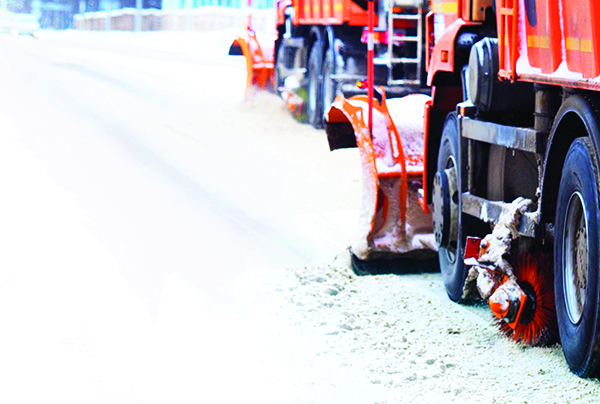
Change can’t be managed like snow in the desert. If it snows once every 50 years, you plow the roads as best you can and wait for it to melt. But if it snows every month or more frequently, you build continuous snow-plowing into the budget and across all processes – or else launch a ski resort!
When change is snowing constantly, many companies are still trying to shovel. It’s a warning of sorts, because in a world where disruption is the norm, traditional coping mechanisms – like cutting costs, hiring freezes, and treating change as a one-off emergency – don’t build resilience. They burn it out.
Hence your need for a “reinvention system” – a set of tools, habits, and organizational muscle memory that converts volatility from a threat to an opportunity.
Don’t treat reinvention as a lastminute shove, but as part of your ongoing operating rhythm – like those snowplows: ready before the first flake falls. That way, you’re already structurally prepared.
Top performing organizations won’t survive disruption by accident. They will: (1) Treat change as a core business capability. (2) Invest in reinvention infrastructure – not just crisis response. (3) Align leadership, culture, and incentives for adaptability.
Statistics inform me there is a sizeable group of open-minded distributors daring to look at the world with courage, curiosity, and a radically open mind when it comes to facing change — those who see reinvention not as a one-time transformation, but rather an ongoing operating system. Please don’t wait for disruption to knock. Invite it!
 |
Howard W. Coleman is principal of MCA Associates, a management consulting firm that works with wholesale distribution and manufacturing companies. Contact him at hcoleman@ mcaassociates.com, 203-906-7268, or visit www.mcaassociates.com.
This article originally appeared in the March/April 2026 issue of Industrial Supply magazine. Copyright 2026, Direct Business Media.

INDUSTRIAL SUPPLY MAGAZINE

The September/October issue of Industrial Supply magazine features an in-depth cover story about Rotator Products. Plus, we're featuring articles by contributing writers Dr. Bharani Nagarathnam and Frank Hurtte, as well as interviews with numerous product and distribution industry experts.