


Talent Matters
Ask for employee feedback, then handle it with care.
by Bharani Nagarathnam
The way your employees feel is the way your customers will feel. And if your employees don’t feel valued, neither will your customers. Employee experience is important because it can affect employee morale, brand and reputation, and customer experiences.
Employee Experience (EX) is the sum of everything an employee experiences throughout his or her connection to the organization. A common way to measure EX is through Voice-of-Employee surveys such as annual engagement surveys, stay interviews, exit interviews, and pulse surveys. According to the McKinsey Employee Experience Survey (2020), employees who report having a positive experience are 16 times more engaged. Highly engaged employees are also eight times more likely to want to stay with their employer. Employee experience isn’t just about creating a better place to work. It’s about creating a better way to work.
REMOVING ROADBLOCKS
When organizations want to improve employee experience, they often start with engagement surveys, recognition programs, or new perks. Those initiatives have their place, but they can overlook a more fundamental question: How easy is it for employees to do their jobs well?
For many employees, the biggest source of dissatisfaction isn’t the work itself. It’s the unnecessary obstacles happening every day. Logging into multiple systems to complete one task. Waiting days for an approval. Hunting for information. Entering the same data more than once. Attending meetings that don’t move work forward. These may seem like minor inconveniences, but together they create an experience that feels frustrating, inefficient, and exhausting. These inefficiencies affect morale, slow productivity, increase errors, and make it harder for employees to focus on serving customers. One of the simplest ways to improve employee experience is to identify what’s making work harder than it needs to be and remove it.
The answers people provide about this often reveal opportunities for meaningful improvement that don’t require significant investment – just a willingness to listen and identify solutions to roadblocks. The people doing the work are often the first to spot inefficiencies and the best source for practical solutions. Listening to their input demonstrates that leadership values their expertise and is committed to making work better, not just asking people to work harder. When leaders make work easier, employees notice. They spend less time navigating obstacles and more time contributing value. Over time, that creates a workplace where people feel supported, productive, and empowered to succeed.
CLOSE THE FEEDBACK LOOP
Asking employees for feedback without sharing what changed or why something didn’t is like putting out a suggestion box that empties into a shredder. Eventually, employees will stop wasting time filling the box. If you’re committed to voice-of-employee programs and employee engagement surveys, don’t let those initiatives fail because you didn’t communicate. Not every suggestion or employee request can be implemented. Employees don’t expect every idea to become policy. They do expect to know someone listened, considered the feedback, and made a thoughtful decision. However, if you don’t communicate how you evaluated ideas and the decisions you made and the actions you took, employee trust will be eroded.
If your company is battling survey fatigue with employees feeling like “nothing will change anyway,” here’s what to do after your next survey closes:
1.Communicate 24-72 hours after the survey closes, thanking employees, sharing participation, and setting expectations for when they’ll hear more.
2. Identify the themes that matter most. Look beyond overall scores to understand where experiences differ by department, location, role, or manager.
3. Prioritize the actions that will have the greatest impact. Focus on a small number of meaningful improvements rather than trying to address every comment.
4. Prepare company communication from the management to share what was learned, what will change, what won’t change (and why), and when employees can expect updates. Highlight the top strengths and areas for improvement based on survey results, 3-5 for each. Select 3-5 initiatives to focus on for the next few months.
5. Provide regular progress updates so employees can see how their feedback is influencing decisions.
Closing the feedback loop creates transparency, builds trust, and ensures employees continue sharing the ideas that make your organization stronger. When distribution leaders openly communicate, stay visible, and treat challenges as something the team can face together, employees take their cues from that confidence.

Dr. Bharani Nagarathnam is an associate professor and director of the Master of Industrial Distribution at the Industrial Distribution Program at Texas A&M University. He is the co-founder of the school's Talent Development Council and works with distributors on talent acquisition, management, development, and retention practices. Connect with him at: https://www.linkedin.com/in/bharanin/
This article originally appeared in the November/December 2026 issue of Industrial Supply magazine. Copyright 2026, Direct Business Media.

INDUSTRIAL SUPPLY MAGAZINE

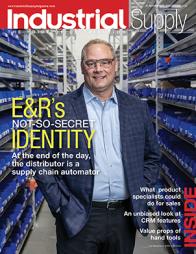
The November/December issue of Industrial Supply magazine features an in-depth cover story about E&R Industrial. Plus, we're featuring articles by contributing writers Dr. Bharani Nagarathnam and Frank Hurtte, as well as interviews with numerous product and distribution industry experts.