


Develop leaders at every level
Leadership is one of the most highly desired and important soft skills for distributors. Soft skills are the personal qualities that make us human, such as communication, creativity, emotional intelligence, empathy, growth mindset, and more.
Technical skills — acquired through training, education, or experience — are often prioritized when hiring talent. However, upskilling soft skills throughout a career is essential for professional development. Leadership and management are among the top upskilling needs in organizations.
Everyone needs leadership skills, and distributors who develop leaders at every level create a pipeline of talent who can take on new challenges and roles.
Here are some strategies for leadership development:
Give employees autonomy to make decisions: As with any skill, your talent needs opportunities to practice leadership. When they are accountable for decision-making, they gain valuable lessons.
Offer mentorship and networking opportunities: Allowing emerging leaders to attend conferences and industry events gives them access to a larger pool of leaders. Finding cross-functional learning opportunities within your organization expands rising leaders’ perspectives.
Explore the 70-20-10 framework for leadership development: Ensure you provide talent experiences in these ratios: challenging experiences and assignments (70%), relationships to help them develop (20%), and training and courses (10%).
Recognize and build strengths: When you focus on what employees already do well and cultivate those skills, they can shine and make an impact early on.
Embrace a culture where failure is seen as learning: Employees must feel safe to take risks that could result in failure for them to grow. Trying new things is an important leadership capability.
The entire organization can benefit when distributors embrace leadership as a mindset and not a position.
“One thing we’ve done is put together a leadership development program," said?Rob Zell, learning leader at Reece USA. "We started with our assistant branch manager population and first-time leaders [supervisors, first-time managers] and put them through a series of training classes, some online programs to talk about core leadership skills, such as clear communication, setting expectations, providing feedback, building trust, etc. Then we rolled out our branch manager training, and we’re about to build our VP and up training.”
When you’re ready to build a leadership development strategy, this resource from Harvard Business Review is a good place to start. It suggests that you begin by defining the business priority driving leadership development.
This "Tip of the Week" is provided by the Talent Development Council | Texas A&M University.

INDUSTRIAL SUPPLY MAGAZINE




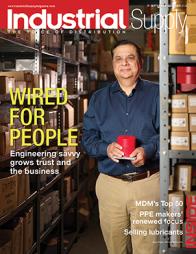
The September/October issue of Industrial Supply magazine features an in-depth cover story about Rotator Products. Plus, we're featuring articles by contributing writers Dr. Bharani Nagarathnam and Frank Hurtte, as well as interviews with numerous product and distribution industry experts.