

Robotics & Automation Q&A Series, Part 2
Following is the latest installment of our expansion from Industrial Supply Magazine's July/August issue covering robotics and automation for industrial distributors. This week's Q&A is with Kevin Graebel, Chief Product Officer, Honeywell Intelligrated. Read the print edition here.
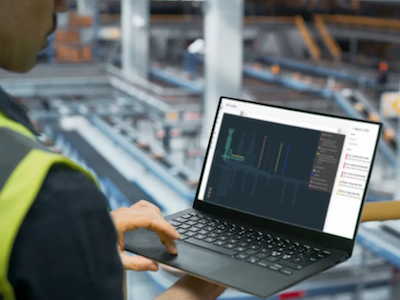
Industrial Supply: What are the 1–3 biggest trends in warehouse robotics and automation today, and what’s driving them?
Graebel: An important warehouse automation trend we are seeing today is a need for modular automation that can start small and grow over time. Past systems have often been rigid and difficult to customize after deployment, requiring custom engineering or significant downtime for each modification. Ever-evolving customer demand and larger economic factors are driving customers today to want more flexible automation that can support their requirements today while remaining adaptable to what they may need in the future.
Another trend is increased automation diversity. Within a single facility, we are seeing more and more types of automation, from depalletizing robots and sortation technologies to AS/RS and AMRs. As businesses have adopted different technologies over time, their automation picture has become more complex. This makes orchestration of different systems through a coherent software platform a top-of-mind consideration. As a result, customers are asking for unified software capabilities across warehouse execution, control and visibility so operations can run smoothly and systems can intelligently adapt over their lifecycle.
IS: What do you recommend distributors should think about and investigate before investing in robotics/automation for their warehouse operations?
Graebel: Distributors should treat automation as an end-to-end operational change program—not just an equipment purchase. Before investing they should:
- Start with the “why”: Rather than going into a project with a specific type of equipment in mind, clarify the problem you are trying to solve and what outcomes it would take to see a return on your investment.
- Assemble a multidisciplinary team ready to take on change: Ensuring the right stakeholders are involved from the beginning (operators, supervisors, warehouse execution leaders, etc.) helps avoid disconnects that can slow down the project later. Seek buy-in from stakeholders to tackle the change - brownfield retrofits in particular can face resistance from managers.
- Validate operational data: Solid data inputs are needed—such as item master/SKU profiles (dimensions, categories, expiry/lot), order patterns (waves, lines, picks/line) and volume/growth data—to not only support the business case for automation but also ensure designs are planned correctly.
- Consider upstream and downstream impacts: Rather than fixing one “problem area” in isolation, investigate how any automation choice impacts inbound and outbound flows, adjacent manual processes and overall order processes.
- Plan early for different phases: Leaders must protect throughput during the upgrade or retrofit period, from examining downtime windows to evaluating staff needed on a temporary basis. They should also proactively plan for future growth and required ongoing maintenance costs. By pressure-testing how the system scales with more volume and additional operators, they can ensure a realistic ramp process and avoid unwanted surprises.
IS: Please describe 1 new and/or innovative product/technology your company has recently released. What are its highlights?
Graebel: Honeywell Intelligrated recently announced its new IntelliSort Irregulars Sorter to help distributors achieve more reliable and predictable throughput performance through automation. The solution is built to sort bulky, unstable or irregularly shaped items that would otherwise require significant manual intervention to move. It can handle a wide variety of sizes, weights and package shapes, processing 3,000 to 5,000 irregular parcels per hour.
The sorter’s modular design enables it to be integrated seamlessly into businesses’ existing sortation infrastructure, helping to improve efficiency, reduce potential downtime and lower maintenance costs. By further automating labor-intensive tasks for parcel and e-commerce operations, the Irregulars Sorter also helps reduce safety risks for personnel.

INDUSTRIAL SUPPLY MAGAZINE

The September/October issue of Industrial Supply magazine features an in-depth cover story about Rotator Products. Plus, we're featuring articles by contributing writers Dr. Bharani Nagarathnam and Frank Hurtte, as well as interviews with numerous product and distribution industry experts.