


Wired for Sales
Salespeople are becoming air traffic controllers.
by Frank Hurtte
One of the advantages of being “long in the tooth” is historical perspective. Sifting through old memories, I can remember when a salesperson’s work was simpler. They carried catalogs, understood their products, and knew their customers. They made calls, solved problems, chased orders, took friendly customers to lunch, and generated enough business to enjoy life.
In those days, a salesperson was the lone ranger; independent, self-sufficient, and fighting for truth, justice, and a meager commission check. Modern salespeople look more like air traffic controllers than our masked hero. Sadly, many companies still think it’s 1997 and the fax machine is making a comeback.
Think about a day in the life of a distributor salesperson today. Before grabbing a drive-through “happy meal,” they have bounced between the CRM system, Teams meetings, supplier portals, pricing engines, customer platforms, text messages, and an overflowing email inbox all while juggling a couple of customer emergencies. This sales guy needs more passwords than product knowledge.
If this whirlwind isn’t enough, customers expect immediate visibility into inventory, freight status, lead times, pricing, engineering support, and project updates. In many cases, they expect answers faster than the distributor’s own internal systems can comfortably provide them.
The salesperson has become the human router connecting all the moving parts, just like an air traffic controller. Thirty years ago, product knowledge made you valuable. Today, product knowledge still matters, but coordination increasingly matters more.
Top sellers in 2026 aren’t the ones who know the most. They’re the ones who coordinate the best. And that’s a major shift. The old model rewarded independence. Today’s selling environment rewards coordination instead of testosterone. Customers don’t buy products, they buy responsiveness, coordination, speed, and communication. That’s someone who can steer the ship when conditions get rough.
Salespeople spend huge portions of their day navigating their own organizations by coordinating technical support and specialists, expediting, tracking project details, and negotiating SPA’s — all the while trying to keep management and supply-partners informed.
Could it be the salesperson’s greatest value is no longer sales persuasion? Might it be reducing friction instead? I know this sounds like heresy coming from somebody who has spent decades preaching sales strategy, but it’s true.
Customers are drowning in complexity themselves. The salesperson who can calm the storm of chaos becomes incredibly valuable.
Consider, also, that artificial intelligence will accelerate the complexity trend. For those who assume AI will replace large portions of technical sales, the reality is far more complicated. Sure, AI answers routine questions, assists with quotations, product selection, and follow-up communication. But AI also increases the speed of business, and faster information flow creates bigger coordination demands.
Customers will still need human beings to prioritize problems, make judgment calls, coordinate resources, and jump in when things go sideways. In Iowa-speak, the seller becomes the leader of the band instead of the player of every instrument.
One more point nobody talks about is burnout. Salespeople are interrupted constantly. Email boxes overflow and text messages arrive at all hours. Internal meetings pop up at the drop of the hat and management demands CRM updates, pipeline reviews, and activity tracking. No wonder people feel overwhelmed.
The truth is, organizations still train and compensate salespeople as if it were 1985 while expecting sellers to operate in an environment that resembles mission control at NASA. Ironically, some younger salespeople are naturally wired for this environment.
Older salespeople often built careers around memory, personal relationships, and independence. Younger salespeople adapt more to multitasking, digital coordination, collaborative workflows, and rapidly changing communication systems. Talk about interesting tension at sales meetings.
One thing is crystal clear: The distributor sales guys and gals of the future will not be remembered for shaking the most hands, carrying the biggest sample case, or knowing everything. They’ll be remembered for keeping the planes from crashing. And being wired for sales.

Straight talk, common sense and powerful interactions all describe Frank Hurtte. Frank speaks and consults on the new reality facing distribution. Contact Frank at frank@riverheightsconsulting.com, (563) 514-1104 or at riverheightsconsulting.com.
This article originally appeared in the July/August 2026 issue of Industrial Supply magazine. Copyright 2026, Direct Business Media.

INDUSTRIAL SUPPLY MAGAZINE



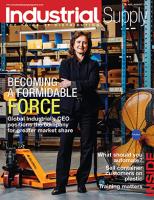

The September/October issue of Industrial Supply magazine features an in-depth cover story about Rotator Products. Plus, we're featuring articles by contributing writers Dr. Bharani Nagarathnam and Frank Hurtte, as well as interviews with numerous product and distribution industry experts.