
 |
by Kim Phelan
While PPE has always been focused on protecting workers from hazards, today’s innovations are expanding that role, says Joe Milot III, product management director at PIP Global Safety, which designs and manufactures a broad portfolio of personal protective equipment (PPE), including protection for hand, head, eye, and face, hearing protection, respiratory, fall, as well as electrical safety and protective clothing and footwear.
 |
| Milot |
Across the industry, Milot observes three key trends that are reshaping product development:
1 Designing PPE workers want to wear. “One of the biggest shifts in PPE innovation is the recognition that comfort and fit are directly tied to safety performance,” he said. “PPE only works when it’s worn correctly and consistently, making wearer acceptance as important as meeting performance standards ... Women’s PPE is a prime example. Historically, much of the industry’s PPE has been designed around male body dimensions, leaving many women with products that don’t fit properly. Poor fit can reduce dexterity, create discomfort, and ultimately discourage consistent use.” Rather than simply resizing existing products, Milot said PIP designs women’s PPE using female anthropometric data and direct feedback from end users. “When PPE fits the worker, compliance becomes a natural outcome rather than something that must be enforced.”
2 PPE is becoming connected. “PPE is no longer simply equipment worn on the job, it is becoming an active source of information that helps organizations make more informed safety decisions,” Milot said.
3 Sustainability is becoming a design requirement. “Customers are looking for products that reduce environmental impact while maintaining the performance and protection they expect,” said Milot. “Looking ahead, sustainability will become a baseline expectation rather than a competitive differentiator. The challenge for manufacturers will be delivering solutions that improve environmental performance without compromising comfort, durability or safety.”
DECISION MAKERS DEMAND QUALITY
 |
| Mielcarek |
Katie Mielcarek, marketing manager at Gateway Safety, which manufactures eye, face, head, hearing and disposable respiratory protection, says workplace injury reports show that employers are still in need of reliable safety products to protect their employees under hazardous conditions. Distributors that carry quality PPE products have extensive opportunity among decision makers in this market.
“End users are realizing that you get what you pay for in regards to product quality. Customers are looking for best practices in quality, such as safety glasses made with virgin raw materials or a premium anti-fog that actually works. Many decision makers also now know to look for third-party certification of quality, such as the UL logo marked directly on the product. That verification mark helps to provide peace of mind that the products meet the applicable product standards.”
At Radians — which manufactures a broad range of high-quality PPE, including hand protection — a major trend in glove development is delivering higher cut and impact protection without sacrificing comfort or dexterity. According to Colter Adkins, Radians product manager—hand protection, advances in fibers, yarns, and shell construction are producing thinner, lighter gloves that still meet demanding cut-protection and impact standards. Higher-gauge constructions, including 18-gauge and emerging 21- to 24-gauge technologies, provide greater flexibility and tactile sensitivity than older, heavier designs.
 |
| Adkins |
“Manufacturers, like Radians, are also improving TPR placement and thickness and incorporating innovative patterns, such as the honeycomb design used in Radians’ recently launched RWG583, an A6 Cut Glove with Level 3 impact protection,” Adkins said.
“Touchscreen compatibility is increasingly important, allowing workers to operate phones, tablets, and other devices without removing their gloves. Radians aims to make touchscreen capability a standard feature in new glove development.”
COMFORT IS A MUST
SureWerx, which develops PPE that includes head and face protection, fall protection, FR and arc flash apparel, high-visibility workwear, and safety footwear, sees a shift across all these categories. “Customers no longer view PPE as just protective equipment. They expect it to be comfortable, lightweight, and designed for the realities of today’s jobsite,” said COO Shawn Gregg.
 |
| Gregg |
“One of the biggest changes we’re seeing is the rapid adoption of Type 2 hard hats,” he continued. “As more organizations move toward enhanced protection from both top and side impacts, there’s also greater focus on improving fit, ventilation and comfort. Protection alone isn’t enough. If a worker doesn’t want to wear it, you’ve only solved half the problem.
“Safety footwear has also evolved dramatically,” Gregg added. “Today, workers expect the comfort and styling of athletic footwear while still meeting demanding safety standards. That shift has driven significant innovation in materials, cushioning and lightweight construction.” He also noted a demand trend for heat stress protection for construction, utilities, and manufacturing workers, which is driving innovation in breathable fabrics, moisture management and cooling technologies that help workers stay comfortable and productive throughout the day.
The biggest PPE challenge Gregg hears about among distributors, safety managers, and workers themselves is getting PPE worn consistently throughout the shift.
END USER CHALLENGES
The biggest PPE challenge Gregg hears about among distributors, safety managers, and workers themselves is getting PPE worn consistently throughout the shift. Most PPE today meets the required safety standards. The difference is what happens after it’s issued, he says. If a hard hat is uncomfortable, a harness restricts movement or footwear causes fatigue, workers naturally look for ways to avoid wearing it or take it off whenever they can.
“That’s why we spend so much time with end users. We want to understand not just how products perform in a lab, but how they perform after eight or 10 hours on the job,” he said.
“Those insights influence everything we develop, from fall protection that allows workers to move more naturally, to hard hats with better fit and cooling, to footwear and insoles designed to reduce fatigue. Our goal is simple: develop PPE that workers actually want to wear because that’s what ultimately improves compliance and safety.
“For distributors, that also creates a much stronger value conversation. They’re not just selling PPE, they’re helping customers solve real workplace challenges around comfort, productivity and worker adoption.”
Mielcarek at Gateway adds, “It’s not a new problem, but it’s one that remains constant in the feedback we get from end users. Workers just simply aren’t going to wear something they don’t like the look or feel of. That’s why Gateway Safety takes the time to design and develop safety products that raise the bar on comfort and style. Before launching a new product, we make sure the features of that product help with a need in the marketplace, such as better fit or better comfort.
“Compliance challenges encourage distributors to ask for more innovative products that they can offer to their customers. Distributors don’t want another knockoff product. And employers who are in tune with the safety needs of their workers are turning to these improved PPE solutions that their employees will actually wear.”
Milot at PIP says one of the biggest challenges they hear is simplifying PPE selection and standardization. Distributors and end users alike want confidence they're selecting the right protection without creating unnecessary complexity across product lines, inventory or worker training, he explains. “The goal isn't just compliance, it's making PPE easier to specify, easier to wear and easier to manage.”
Another growing priority is improving visibility into what's happening in the field, particularly for lone workers and employees operating in remote or high-risk environments. “Organizations are looking for solutions that help accelerate emergency response while providing meaningful data that identifies trends, supports continuous improvement and strengthens overall safety programs,” Milot said.
“At PIP, we're helping customers address these challenges by combining a comprehensive PPE portfolio with application expertise, worker-focused product design and connected technologies that enable more proactive, data-driven safety management.”
A common challenge that Adkins at Radians sees is the need for higher cut and impact protection, particularly in construction and other demanding environments. “Because workers often perform multiple tasks, they need gloves that protect against several hazards without restricting movement, grip, or productivity,” he said.
“The goal is to develop versatile gloves that support multiple applications and reduce the need to frequently change hand protection.
“Impact protection is another priority,” Adkins added. “Historically, TPR needed to be thick to achieve meaningful impact ratings. New materials and designs provide thinner, more flexible impact protection while still meeting performance standards. Reducing bulk can improve comfort and encourage consistent glove use.”
NEW INNOVATIONS
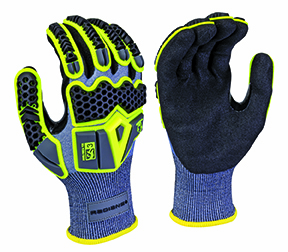 |
| The RWG583 from Radians is an 18-gauge glove that offers ANSI A6 cut protection and Level 3 impact protection without compromising dexterity. |
Radians: One of Radians’ most innovative recent hand-protection products is the RWG583. It uses advanced materials and construction technology to provide strong protection in a lighter, more comfortable design.
The RWG583 is an 18-gauge glove that offers ANSI A6 cut protection and Level 3 impact protection, helping protect workers from both cut and impact hazards, without compromising dexterity. Its TPR honeycomb design delivers targeted protection while supporting flexibility and freedom of movement.
Advanced fiber and shell construction provide high protection without the weight and bulk traditionally associated with cut- and impact-resistant gloves. Improved coating technology enhances grip and durability, while touchscreen compatibility allows workers to operate electronic devices without removing their gloves.
“These features make the RWG583 a versatile choice for construction, material handling, manufacturing, automotive, and other applications requiring protection, dexterity, comfort, and productivity,” said Adkins.
PIP: Milot says one example of where PPE innovation is heading is the PIP Traverse Full Brim Type II Safety Helmet. As jobsites become more demanding, safety professionals are looking for head protection that goes beyond meeting standards to better address real-world risks.
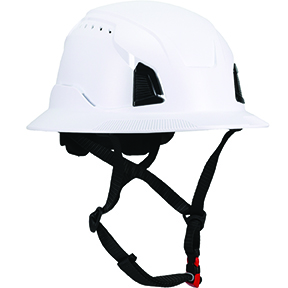 |
| The PIP Traverse Full Brim Type II Safety Helmet integrates Mips technology to help reduce rotational motion transmitted to the head during certain angled impacts. |
The Traverse helmet combines ANSI Type II protection with optional technologies that enhance worker safety. Integrated Mips technology is designed to help reduce rotational motion transmitted to the head during certain angled impacts, addressing a type of impact common in many workplace incidents. The helmet is also compatible with Quin connected safety technology, allowing organizations to add real-time incident detection, emergency notifications and actionable safety data that can improve response times, particularly for lone workers or crews operating in remote environments.
“By bringing together advanced impact protection and connected worker capabilities in a single platform, the Traverse demonstrates how modern PPE is evolving from equipment that simply protects workers to solutions that help organizations proactively manage workplace safety,” he said.
Surewerx: “One product that really reflects our approach to innovation is the Fall Safe F.L.O. (Flexible Lock Optimization) Self-Retracting Lifeline,” said Gregg.
“During our field research, one piece of feedback came up repeatedly: Traditional SRLs often lock during normal movement, forcing workers to stop, reset and reposition. While these devices are designed to protect workers during a fall, nuisance lockups can interrupt workflow and reduce productivity.”
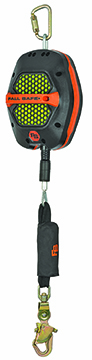 |
| The Fall Safe F.L.O. (Flexible Lock Optimization) Self-Retracting Lifeline from SureWerx has patented sensing technology that distinguishes between normal working movement and an actual fall. |
That insight led to the development of F.L.O. Using patented sensing technology, it distinguishes between normal working movement and an actual fall, significantly reducing nuisance lockups while maintaining industry-leading fall protection and low fall-clearance performance. The result is greater freedom of movement without compromising worker safety.
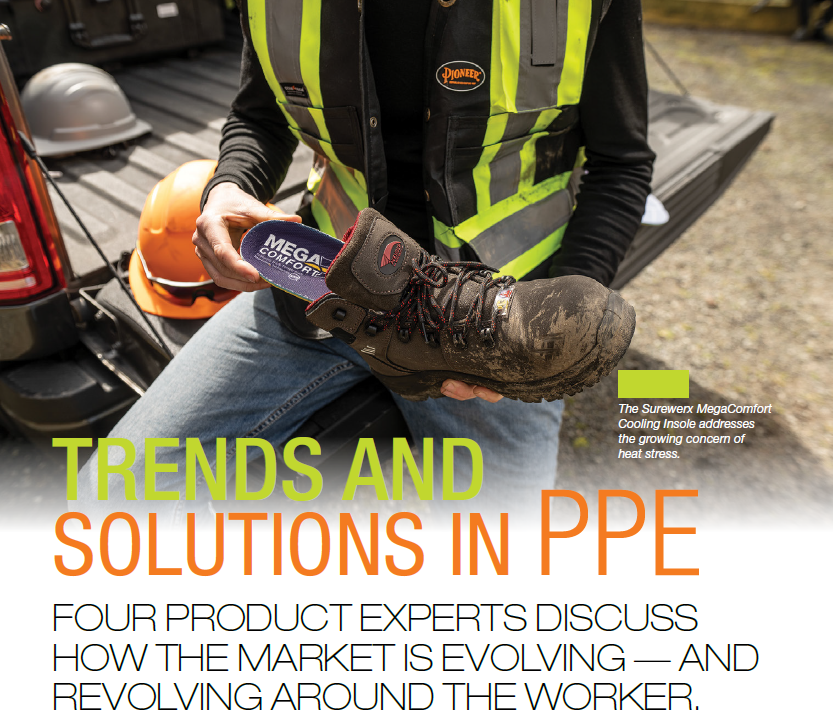
Another example, Gregg cited, is their new MEGAComfort Cooling Insole, which addresses one of the industry’s fastest-growing concerns, heat stress. The insole incorporates advanced cooling materials originally developed for aerospace applications to help absorb and dissipate heat away from the foot. Combined with ergonomic support that helps reduce fatigue, it keeps workers more comfortable during long shifts, particularly in environments where they spend hours on hot concrete, asphalt or steel surfaces.
“Both innovations reflect the same philosophy: The best PPE doesn’t just meet safety standards, it removes barriers that make PPE uncomfortable or difficult to use,” Gregg said. “When products improve comfort and support productivity, workers are more likely to wear them consistently, leading to better safety outcomes.”
Gateway: Vector7 is an example of the company’s thorough design and development process. “With the market for safety glasses highly saturated with ‘me too’ products, Gateway Safety aims to provide differentiated solutions. Vector7 features a revolutionary design that offers customizable fit and ultimately better all-day comfort,” said Mielcarek.
“Safety glasses should cover all the angles. Vector7 is lightweight, comfortable and meets the ANSI Z87.1+ standard. However, with seven different temple positions, Vector7 raises the bar for fit.
“These safety glasses can be adjusted at just the right angle to get the best fit and the best protection. Translucent temples create a sleek style, while reaching further around the head to help prevent slipping. A wraparound lens extends side coverage to ensure no gaps. Plus, Vector7 weighs less than an ounce, making it easy to wear all day without discomfort,” she said.
Offering eight lens colors, including both indoor and outdoor options, Vector7 also comes in fX3 premium anti-fog, a better performing, longer-lasting anti-fog solution than traditional anti-fog coatings.
Mielcarek noted the innovative product still comes with exceptional quality — it is independently tested and certified by UL to meet ANSI Z87.1+ and CSA Z94.3 standards. Vector7 also meets the ballistic impact resistance requirements for eyewear in U.S. Military Performance Specification MIL PRF-32432 (GL).
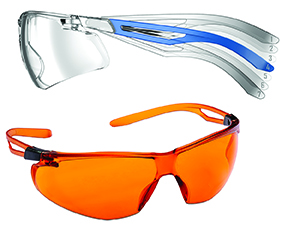 |
| Gateway Safety’s Vector7 is lightweight, comfortable and meets the ANSI Z87.1+ standard. With seven different temple positions, the safety glasses can be adjusted at just the right angle to get the best fit and protection. |
This article originally appeared in the September/October 2026 issue of Industrial Supply magazine. Copyright 2026, Direct Business Media.

INDUSTRIAL SUPPLY MAGAZINE
The September/October issue of Industrial Supply magazine features an in-depth cover story about Rotator Products. Plus, we're featuring articles by contributing writers Dr. Bharani Nagarathnam and Frank Hurtte, as well as interviews with numerous product and distribution industry experts.