


Talent Matters
The linchpin of profitability.
by Bharani Nagarathnam
You’ve heard this before, but it’s true: In many organizations, strategy goes to the front line to die. Your plans and strategies don’t translate into frontline behaviors automatically. Branch and functional frontline managers are your execution engines. Consistent branch performance depends on frontline managers turning strategies in execution by driving employee productivity, safety, reliability, accuracy, labor utilization, and customer experience. Developing and empowering frontline managers with effective people skills, communication and leadership capabilities is the linchpin to performance and profitability.
Local managers know their customers’ needs better. They control daily execution at the branch — sales, operations, delivery, and service, where value is created, costs are controlled, and customer experience is managed. Training and empowering them to execute is critical to success or even survival.
Start with promoting employees to frontline managers based on their aptitude for such things as leading people, ethics, curiosity, and hard work. I also wrote about the importance of training for first-time managers in the July/August column. Preparing individual contributors who are being promoted to be first-time managers is crucial. This training can start even before the promotion. High potentials should be provided with people management skills before they become a manager.
DEVELOPING FRONTLINE CAPABILITY
The following are several areas of capability to develop in frontline managers, not in any particular order.
- Foundational people management skills. Train frontline managers in basic labor laws, safety rules, and company HR policies to help them handle attendance, safety, and performance issues.
- Goal Setting. Setting employee expectations and metrics are key to performance measurement. This includes shift handoffs, visual boards, and escalation routines that keep work on track.
- Feedback. Learning to provide timely, specific, and constructive feedback will help guide employees. In fact, Gen-Z expects frequent feedback.
- Coaching and Mentoring. In addition to one-on-one meetings, ride-along coaching and modeling key behaviors are important parts of developing your new managers.
- Creating a Culture of Accountability. Learning how to set expectations, handle escalations, managing service issues, and handle employee behavioral or performance issues are critical capability for frontline managers.
- Communication. Conducting quick huddles, sending email updates, and generally keeping everyone informed helps the team to execute on plans. The larger the team — and if you have shifts — the greater the need for good communication. Coaching frontline managers to provide both updates in a regular cadence, as well as addressing questions and concerns promptly help keep the branch running smoothly.
- Recognition and Rewards. Show frontline managers how to show appreciation and create motivation, both through formal recognition and rewards programs as well as with an informal pat on the back or a Friday delivered lunch. Both are important and help build teamwork. Frontline managers should be prepared to use rewards in fair and strategic ways to motivate employee engagement.
- Recruitment and Retention. Anyone who has manager in their title should always be recruiting staff to their team and work on retaining top talent. Cross-training employees also helps staff maintain productivity during turnover. Frontline managers should be trained to recognize that this is part of their job.
- Financial Acumen. Improving financial literacy and key performance indicator (KPI) tracking is important if the frontline manager is responsible for P&L. This includes payroll, scheduling, overtime, truck utilization, shrinkage, and more.
- Empathy. Finally, it is important to be human and learn to show empathy to earn the trust and respect of the team. This is a true leadership skill that is essential for frontline managers.
THE BRIDGE TO PROFITS
The capabilities I’ve outlined must be developed through training and hands-on application — this will yield longterm results for the business.
Your frontline managers directly supervise up to 80% of your workforce, yet they are often your least trained managers and leaders. When they fail, strategies break down and profits leak. Frontline managers are not just a layer of management; they are the ultimate linchpin connecting your strategies and plans to bottom-line profitability.

Dr. Bharani Nagarathnam is an associate professor and director of the Master of Industrial Distribution at the Industrial Distribution Program at Texas A&M University. He is the co-founder of the school's Talent Development Council and works with distributors on talent acquisition, management, development, and retention practices. Connect with him at: https://www.linkedin.com/in/bharanin/
This article originally appeared in the September/October 2026 issue of Industrial Supply magazine. Copyright 2026, Direct Business Media.

INDUSTRIAL SUPPLY MAGAZINE




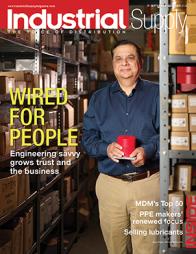
The September/October issue of Industrial Supply magazine features an in-depth cover story about Rotator Products. Plus, we're featuring articles by contributing writers Dr. Bharani Nagarathnam and Frank Hurtte, as well as interviews with numerous product and distribution industry experts.