
 |
by Kim Phelan
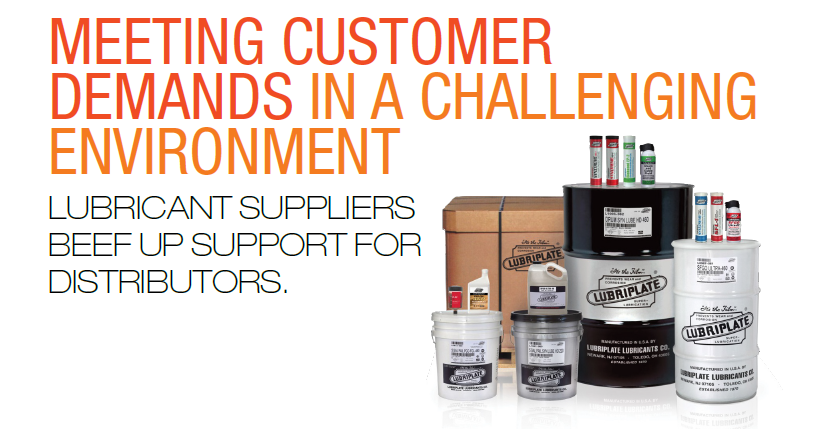
End-users are demanding lubricants that provide superior performance that meet demanding operational conditions and OEM specifications, according to Ellie Girard, regional manager, Southern California and OEM marketing specialist at Lubriplate Lubricants Company. “Because of this, we are seeing exceptional synthetic-based lubricants being developed to not only extend the life of the equipment, but also the life of the lubricant itself.
She notes, too, that outside regulatory factors are impacting the development of lubricants. “For example, end-users are looking for lubricants that are free from forever chemicals, aka PFAS. In addition, many end-users, especially in food, beverage, and pharmaceutical spaces, are now requesting MOAH/MOSH-free lubricants.”
Additionally, Girard says end-users want real-time monitoring capability of their lubrication programs. To do this, plants are implementing digital tools like Bluetooth automatic lubrication systems that allow them to monitor their programs in a much more predictive way rather than reactive fashion.
Girard says because Lubriplate sells 100% through authorized industrial distribution, supporting its distribution partners globally is their top priority.
“Distributors offer a lot of products to their customers, so they need our team to be lubrication experts for them,” she said. “To do that, we have a highly trained group of 18 factory-direct regional managers who are available to assist distributors from the initial sales call to full lubrication program implementation. A large part of that distributor support comes in the form of our no-charge, Extra Service Program, which includes a variety of value-added services for our distributor partners and their customers. Some of those services include no-charge oil analysis on Lubriplate fluids, a no-charge color-coding and tagging program as well as lubrication training for both distributors and end-users.”
What’s new at Lubriplate? The supplier recently upgraded its production facility to include two dedicated manufacturing lines which are used solely for synthetic, NSF/H1 food grade oils. “We did this to offer our users synthetic oils which are free from MOAH & MOSH,” said Girard.
THE PRESSURE’S ON FOR MAINTENANCE TEAMS
At Kano Labs, Vice President of Kano Sales, Sal Randisi, says there is a distinct call for lubricants that help keep equipment running longer with less intervention.
“Maintenance teams are being asked to increase uptime, extend equipment life, and do more with fewer resources,” he said. “They want products that reduce friction and wear, protect components, extend service intervals, and ultimately lower the total cost of maintenance.
“We are also seeing stronger demand for application-specific solutions. End users are looking beyond a general-purpose lubricant and asking more detailed questions: Will it perform under extreme temperatures or heavy loads? Will it resist water and corrosion? Is it compatible with plastics and elastomers? Does it meet the requirements of a food-processing environment? The right lubricant is increasingly about matching the chemistry to the application.”
A third market trend Randisi observes is demand for ease and precision of application. “Performance is not only about what is inside the container,” he said. “End users want products that are easier to apply, reach difficult areas, reduce waste, and help maintenance professionals get the job done faster. The products that create the most value are the ones that combine strong technical performance with practical benefits in the field.”
Randisi notes that Kano Labs wants its distributors to be problem solvers, not just product sellers. The best lubricant recommendation starts with understanding the application, including load, speed, temperature, environmental exposure, material compatibility, and regulatory requirements, he says.
“Our job is to give distributors the technical knowledge and tools to have those conversations confidently,” Randisi said. “We support them with product education, application guidance, technical resources, training, and sales tools that help connect a customer’s maintenance problem to the right solution.
“We also learn a great deal from our distribution partners, he continued. “They are often the first to see new maintenance challenges and changing customer expectations. That feedback helps us improve products, packaging, application methods, and technical support. When the manufacturer and distributor share information effectively, the end user gets a better solution.”
To serve both end users and distributors, Kano Labs is focused on improving both product performance and the way the product is used. A good example, Randisi says, is Kroil’s SprayTech technology, which gives users greater control over application by allowing them to switch between a broader spray and a targeted stream. That precision can help users reach difficult areas, reduce waste, and apply the product more efficiently.
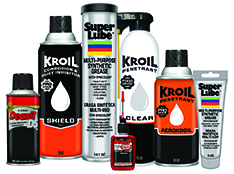 |
“We are also developing solutions for specialized environments,” he said. “Kroil Clear, for example, is a food-grade penetrating oil designed for maintenance and disassembly applications in food-processing facilities. It’s clear, odorless, non-staining formulation addresses needs that conventional penetrating oils may not meet in those settings.
“Across the Kano Laboratories portfolio, our focus is on technologies that reduce friction and wear, protect against rust and corrosion, perform in demanding conditions, and help extend equipment life,” he added. “For the end user, value comes down to results. If the right lubricant can help prevent a component failure, reduce maintenance frequency, or avoid unplanned downtime, the value of that product goes far beyond the cost of the container.”
AS PRICES RISE, TECHNICAL SUPPORT MATTERS
Helen Kilfoyle, OEM technology advisor at ExxonMobil observes that international conflict has put pressure on base oil supplies, hence the rising prices of finished lubricants. She says it’s caused end users to focus on two critical priorities:
- Improved Total Cost of Ownership (TCO) — “Customers are demanding longer-life lubricants that extend drain intervals and reduce maintenance requirements,” said Kilfoyle. “Many end users are, smartly, taking advantage of condition-based monitoring through lubricant analysis to base oil change outs on condition versus time in service.”
- Supply Resilience and Cost Stability — “Keeping operations consistent means maintaining a steady supply of lubricant products,” she added. “End users need reliable, accessible alternatives and suppliers who have the scale to mitigate the disruption we’re seeing.”
To help distributors navigate customer demands, Kilfoyle said Mobil lubricants support distributors through expert guidance, data-driven recommendations, and streamlined decision-making tools.
- Expert Technical Support — “Our highly qualified sales and lubrication engineers work directly with distributors and their customers to understand specific equipment applications, operating conditions, and performance requirements. Similarly, our OEM Technology Advisors work with equipment manufacturers to ensure the proper lubricant specifications are met.”
- Data-Driven Recommendations — “We conduct detailed analysis for each application, operating temperature, speeds, loads and more so we can provide clear guidance through our maintained lubricant database and through direct consultation with distributors and end users.”
- Supply Resilience & Flexibility — “Our supply team works diligently to avoid supply disruption, but true reliability means always having a backup plan. We recommend multiple compatible products to OEMs and support distributors with alternatives, ensuring we can reliably serve customers in the event that supply disruptions do occur.”
- Condition Monitoring and Continuous Support — “Our Mobil Lubricant Analysis program enables distributors to help customers monitor equipment and oil conditions, identifying key issues before they manifest into challenges, optimizing oil drain intervals (ODIs), and reducing TCO.”
Kilfoyle pointed to four ways Mobil’s products deliver superior protection and value:
- Advanced Base Oil Technology — Premium base oils, including patented mPAO (Metallocene Polyalphaolefin - API Group IV synthetic) formulations, provide optimized equipment protection and extended drain intervals without compromise.
- Precision Formulations — Products are blended to specifications with select additive systems tailored for specific operating conditions and ensuring they meet global standards for equipment design life expectancy. To ensure precise viscosity calculations, we use elastohydrodynamic lubrication (EHL) calculations to determine the oil’s internal resistance to flow.
- Expert-Backed Support — Products are supported by a highly trained and qualified global field engineering team and backed by the Mobil Lubricant Analysis monitoring program, giving end users confidence that their lubricants are performing as intended and described by distributors.
- OEM-Validated Solutions — Products are approved by the world’s leading equipment builders and supported by a team of OEM Technology Advisors, ensuring end-to-end reliability for the distributors’ customers.
ENVIRONMENT VERSUS PERFORMANCE: NO LONGER AN EITHER-OR CHOICE
At Renewable Lubricants, Vice President Benjamin Garmier says a big change has occurred in the way customers view environmental responsibility and lubricant performance. “It’s no longer as an either-or decision,” he said. “They want products that reduce environmental risk while still protecting their equipment, meeting performance requirements, and providing dependable service life.”
The second major trend he points to is a stronger focus on total operating cost rather than simply the price of a gallon of oil. End users are looking for longer fluid life, improved oxidation stability, better performance across wide temperature ranges, reduced wear, and fewer unplanned shutdowns. A higher-performing lubricant may cost more initially, but the value becomes clear when it extends equipment life, reduces maintenance, or prevents a failure.
“We are also seeing increased demand for application-specific products,” said Garmier. “Customers do not just want a general hydraulic oil anymore. They may need a biodegradable fluid for equipment operating near water, a dielectric hydraulic fluid for utility equipment, a fire-resistant product for a high-temperature operation, or a food-grade lubricant for a processing facility.
“Distributors who can understand the application and offer the correct solution are providing much more value than someone simply selling a commodity lubricant.”
To support distributors well, Renewable Lubricants understands that distributors are not lubrication chemists. “Our job is to give them access to the technical knowledge and support they need when an opportunity comes up,” Garmier said.
“That support often starts with helping the distributor understand what the customer is currently using, what equipment is involved, how the equipment operates, and what problem the customer is trying to solve,” he continued. “We help cross-reference existing products, review OEM requirements, evaluate operating temperatures and environmental concerns, and recommend the appropriate lubricant.
“We also provide product training, technical data, compatibility and conversion guidance, samples, and direct access to our technical team. For larger or more complicated opportunities, we are willing to join the distributor on a customer call or help them work through the application directly.”
The most successful lubricant sales usually begin with identifying a problem, he adds, such as excessive wear, short oil life, cold-weather performance, leaks, environmental exposure, fire risk, or repeated downtime.
“When the distributor can bring in the manufacturer and help solve that problem, the conversation becomes about value instead of price.”
Garmier says much of the company’s product development is centered on getting more performance from renewable and biosynthetic base stocks. “Our proprietary Stabilized HOBS technology is designed to improve oxidation stability, anti-wear performance, cold-temperature operation, and fluid life.
“These base stocks also have naturally high viscosity indexes and low volatility. That allows many of our products to maintain their viscosity across a broader temperature range while providing higher flash and fire points than conventional petroleum fluids of similar viscosity. Depending on the application, that can improve equipment performance, reduce fluid consumption, and provide an additional level of safety around heat and ignition sources,” he explained.
Compatibility is another important feature, he notes. “Customers are often concerned that switching to a biodegradable or renewable lubricant will require a complicated conversion. We formulate many of our products to be compatible with conventional petroleum-based fluids, common seals, and standard system materials. That helps make the transition easier for both the distributor and the end user.
“A good example is our new Bio-Bottle Jack Hydraulic Fluid,” he said. “It is a readily biodegradable ISO 32 biosynthetic-blend fluid developed specifically for bottle jacks, pallet jacks, lift gates, forklifts, and other lifting systems. It combines anti-wear protection, oxidation stability, rust and corrosion protection, water separation, a high viscosity index, and a higher flash point in a product designed for environmentally sensitive applications.
“The goal is not to make a lubricant that performs well “for a renewable product.” The goal is to make a high-performance lubricant that solves the customer’s problem while also improving safety and reducing environmental impact.”
CITGO LUBRICANTS’ SWIFTSHIP PROGRAM FOR DISTRIBUTORS
CITGO Lubricant Product Manager Erica McDonald says changes in industries are usually the driving forces that lead to innovation or new trends. “We’ve seen a reduced workforce, which led to a need to simplify practices, especially maintenance,” she said. “More robust products that can withstand wide temperature ranges and extended oil drain intervals are now necessary.”
She added that end users demand a solution that is both practical and dependable. “The increased trend of using synthetic lubricants in applications allows operations to navigate around these industry changes and challenges. Synthetic lubricants offer performance advantages such as longer drain intervals and increased thermal stability. Improved energy efficiency benefits are often found when utilizing synthetic lubricants. Synthetic lubricants also make sense when considering total cost of ownership for equipment, often reducing operating costs and down time.”
The use of sustainable lubricants is also a growing trend in the lubricants market due to regulatory requirements, according to McDonald. Sustainable lubricants include biodegradable and environmentally acceptable lubricants.
“These products are typically used in areas that are considered environmentally sensitive, like marine or forestry applications. Although the adoption of sustainable lubricants may have come about due to regulation requirements, end users can count on the performance of these products. The use of these products minimizes environmental impact, should a spill happen, while also adequately protecting equipment.”
On the distribution-support front, CITGO Lubricants offers a unique program called SwiftShip.
“It allows our distributors to effortlessly sell industrial and specialty products without having to hold these products in their already full warehouses,” said McDonald. “In as little as four clicks within our internal ordering portal, distributors can order and ship products directly to their customers.”
SwiftShip offers the CITGO Lubricants range of Clarion Lubricants and Industrial Synthetic lubricants products. She said the portal gives distributors real-time pricing, floor stock visibility, intuitive cross-reference tool and reference information like OEM recommendations, safety data sheets and product information sheets.
McDonald noted that CITGO Lubricants also offers a wide range of training from webinars to hands-on opportunities like the CITGO Technical Resource Institute (TRI). “TRI is a learning opportunity for our distributors at an on-site facility where they can learn not just about our products, but the equipment/industry that uses them. We offer TRI courses on On-Road, Construction and Grease.”This article originally appeared in the September/October 2026 issue of Industrial Supply magazine. Copyright 2026, Direct Business Media.

INDUSTRIAL SUPPLY MAGAZINE



The September/October issue of Industrial Supply magazine features an in-depth cover story about Rotator Products. Plus, we're featuring articles by contributing writers Dr. Bharani Nagarathnam and Frank Hurtte, as well as interviews with numerous product and distribution industry experts.